Compare✳
Same questions. Different answers. Clear decision frameworks for choosing the right AI for your work.
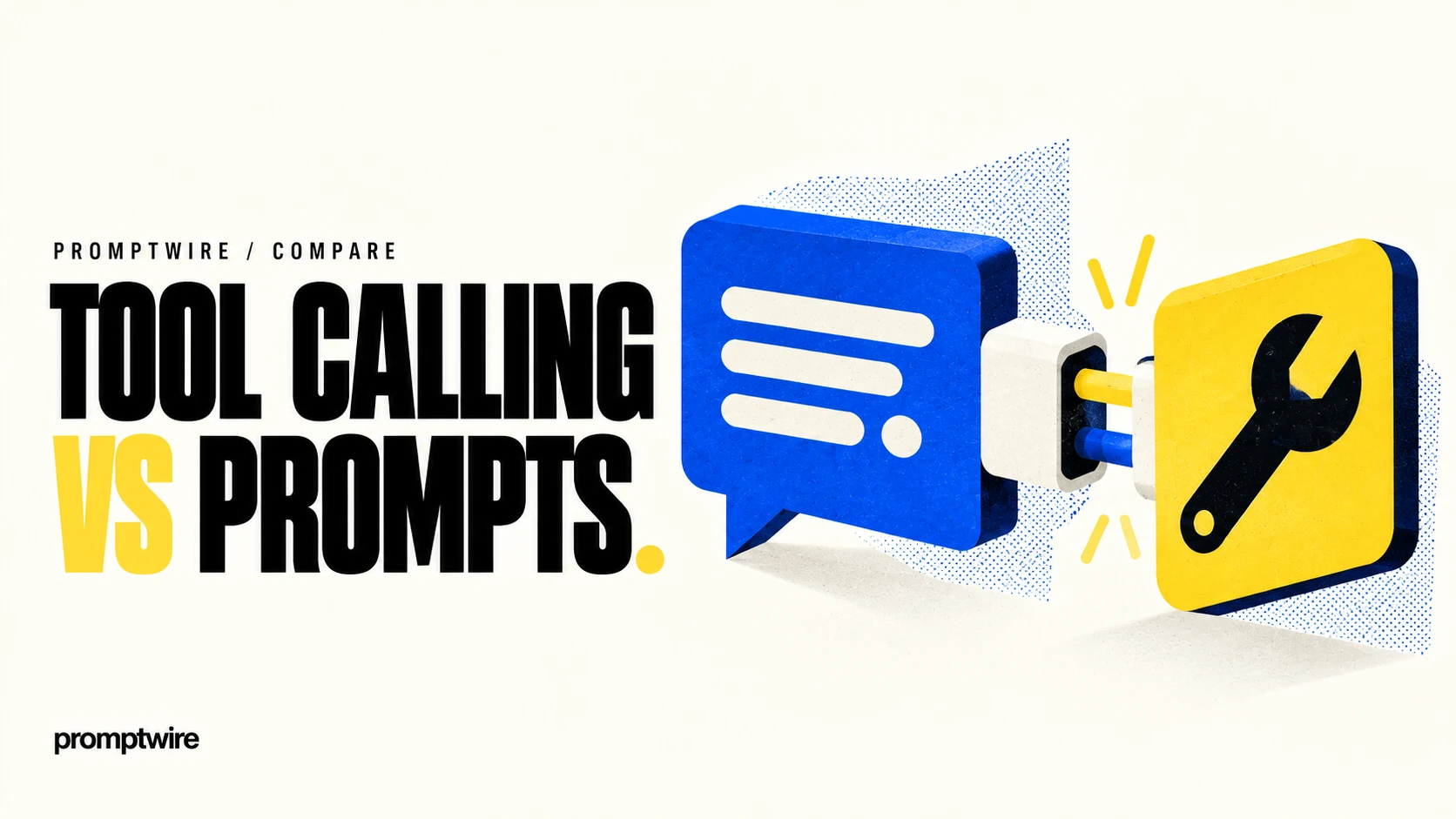
Tool calling vs prompt-only work: when actions need an interface
An action needs a defined interface when it must change something outside the conversation.

Structured output vs free text: choose the right contract
A machine-readable contract can simplify integration, but it does not make the content true.

n8n vs Gumloop: compare control and workflow building
n8n and Gumloop should be evaluated on control, visibility and the operating work around an AI process.

Ollama vs LM Studio: two routes into local AI
Ollama and LM Studio offer routes into local-model work, but the model and configuration remain central to the result.

Hosted AI vs local AI: where should the model run?
The deployment decision changes who carries the work of running, updating and governing a model.

Midjourney vs Ideogram: evaluate image style and lettering
Compare Midjourney and Ideogram with a brief that makes visual style and lettering requirements explicit.

HeyGen vs Synthesia: evaluate presenter-led video
HeyGen and Synthesia should be tested with the same presenter-led message and audience.

Notion AI vs Coda AI: knowledge workspace or structured document
Notion AI and Coda AI should be compared through the way your team organises information.

Granola vs Fathom: compare notes and follow-up
Granola and Fathom can be compared by how their meeting workflows support attention, review and follow-up.

Glean vs a custom knowledge assistant: buy or build retrieval
Choosing Glean or a custom knowledge assistant is a decision about ownership as well as retrieval.

Large vs small models: match capacity to the task
A larger model is not always the most useful place to spend a system’s time and budget.

Canva AI vs Adobe Firefly: campaign production or asset creation
Canva AI and Adobe Firefly can sit at different points in a campaign-production workflow.