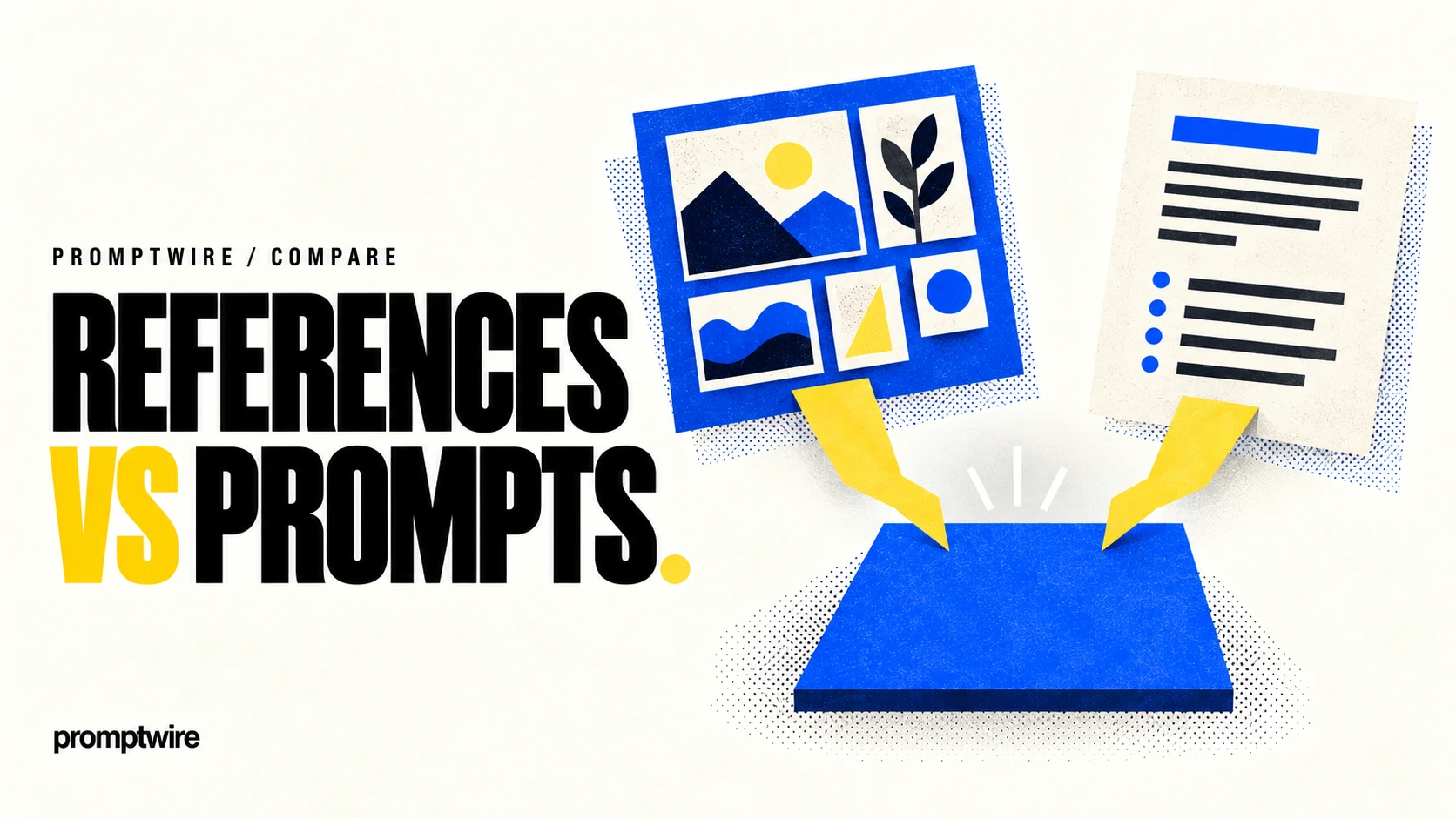
Text prompts are useful for stating intent, content and exclusions. References can convey composition, palette and spatial relationships. Neither is a reliable substitute for checking the result. A model may preserve an unwanted detail or interpret a visual cue differently from the designer.
Compare controlled briefs
Hold the intended subject and output format constant. Test text alone, reference alone where supported, and a combined instruction. Judge whether the key editorial idea remains clear at thumbnail size and whether incidental details distract from it.
Keep the brief explicit
Explain which reference qualities matter and which elements should be replaced. Use inputs you are authorised to use. For a publication, evaluate a group of covers together so consistency does not come at the expense of each article having a distinct visual idea.
Compare repeatable direction with open exploration
Give one workflow a permitted reference image and another a text-only brief for the same fictional campaign. Compare identity, layout and the effort needed to make a small revision. Also assess whether the reference unduly constrains exploration. This proposed comparison treats references as information with a purpose, not as a universal shortcut. Check the rights to the reference separately from whether it improves visual consistency.
Questions readers ask
When does an image reference help more than extra prompt text?
When visual relationships or identity are difficult to express precisely in words. It can improve direction, but output consistency still needs checking.
Follow the evidence.
AI-assisted editorial decision guide. No hands-on benchmark, product score or winner is claimed. The proposed comparison is a method readers can run; current features, terms and results must be checked for the selected versions.
Public sources support the factual background. Analysis and illustrative exercises are identified in the text. How we assess AI · Editorial standards
Spot a factual error or an outdated detail?