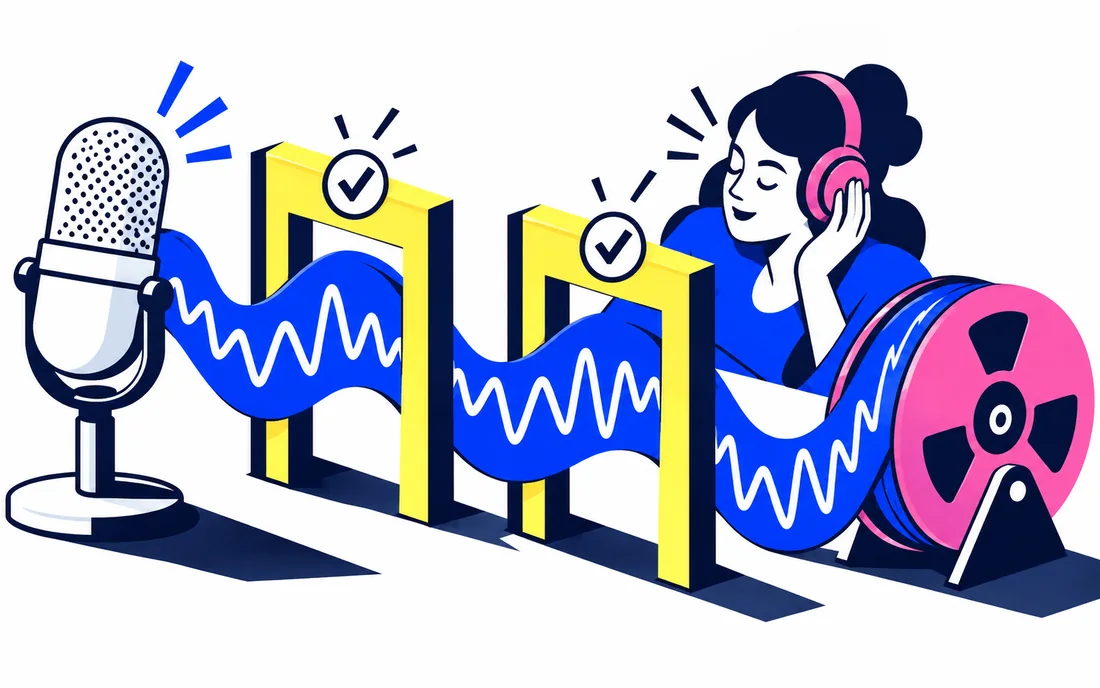
Voice synthesis generates spoken audio from an input such as text. Review intelligibility, pronunciation, pacing and intended voice use separately. A natural-sounding voice can still mispronounce a name or communicate the wrong emphasis, and creating a likeness does not itself establish permission to use it.
Start with the listening task
A navigation instruction, an educational narration and a dramatic character require different pacing and expression. Write the script for listening: shorten tangled sentences, expand unfamiliar abbreviations and decide how numbers should be spoken. The voice model cannot repair an unclear message by tone alone.
Use identity responsibly
Choose a licensed voice or obtain the required permission before creating a voice based on a real person. Make the synthetic nature clear when listeners could otherwise misunderstand who is speaking. Review the provider’s current controls and terms for the intended use.
Listen in context
Test pronunciation, emphasis and pauses on the actual playback device. Check whether background music masks important words and provide a text alternative where useful. For an illustrative course lesson, listen to the complete paragraph rather than approving isolated sentences. A voice can sound natural while placing emphasis in the wrong place. The final quality standard is whether people can understand the content and its origin, not whether the audio can pass as an unlabelled human recording.
A worked example
Prepare a short narration with an acronym, a price and a technical term. Listen without the script and write down what you understood. Compare that with the approved copy, then revise pronunciation or pacing where needed. For accessibility, also provide accurate text or captions where the format calls for them, instead of assuming every audience member can use the audio.
Questions readers ask
What is the difference between synthesis and recognition?
Synthesis produces speech; recognition interprets spoken audio. A conversational voice system may connect both with a model and other software.
Follow the evidence.
AI-assisted explanation with linked technical references. Examples are illustrative learning exercises, not reported customer deployments or experimental results.
Public sources support the factual background. Analysis and illustrative exercises are identified in the text. How we assess AI · Editorial standards
Spot a factual error or an outdated detail?