Mati Staniszewski is a co-founder of ElevenLabs, whose work includes generated speech and voice interfaces. His documented background includes enterprise technology at Palantir. The founder story connects expressive audio with a practical challenge: making a spoken system intelligible, responsive and appropriate for the people who use it.
- Person
- Mati Staniszewski
- Company
- ElevenLabs
- Area of work
- Speech generation and conversational audio
From deployment work to voice products
ElevenLabs’ biography identifies Mati Staniszewski as its co-founder and describes earlier work at Palantir helping organisations deploy technology. It also notes his mathematics studies at Imperial College London. The company’s platform now spans generated speech, transcription and conversational voice workflows.
Public record: ElevenLabs: Mati Staniszewski biography
Why voice is an interaction problem
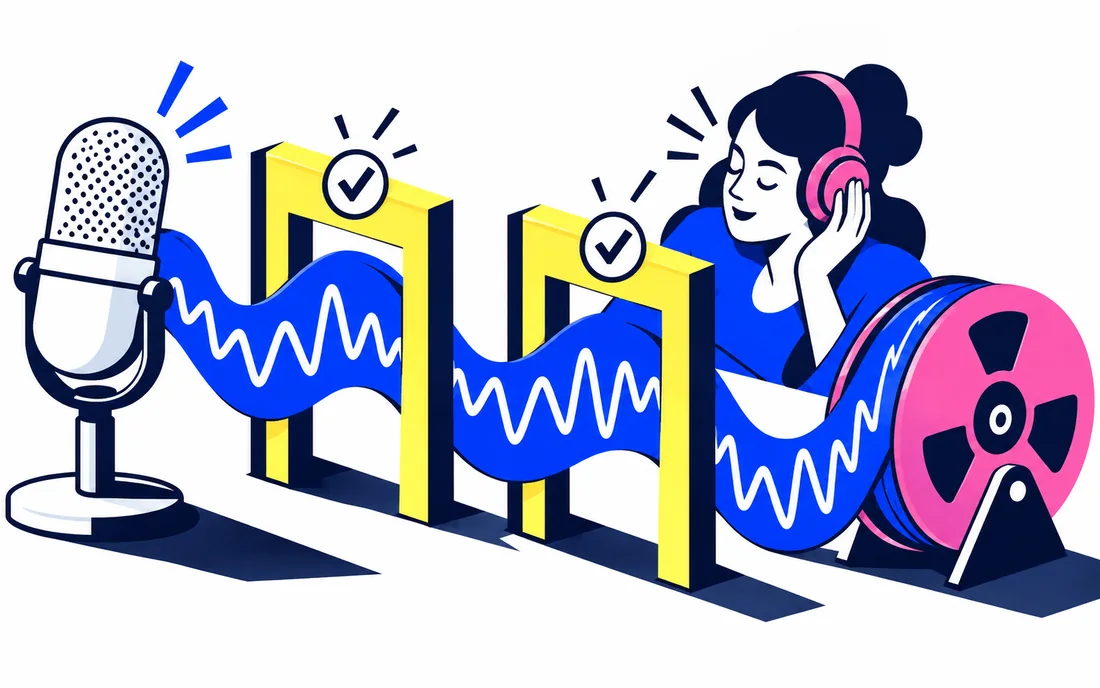
Text can be scanned, corrected and reread. Spoken information arrives in sequence, so a listener may miss an important qualification while the system continues talking. A voice assistant also has to deal with pauses, interruptions and uncertain recognition. These factors make a natural-sounding voice only one part of the experience. Our analysis is that a useful audio product must match its delivery to the task: a narration needs pacing, while an interactive assistant needs to recognise when the user has not finished speaking.
Where enterprise experience becomes relevant
Staniszewski's biography describes earlier work helping organisations deploy technology. In a voice workflow, deployment includes connecting audio to information and actions, not simply generating a sound file. A customer-facing assistant might need to retrieve an approved answer, confirm a request and transfer to a person. Each connection creates an opportunity for error. The public biography provides context for this operational perspective; it should not be read as proof that any particular voice deployment is reliable without evaluation.
How to evaluate a voice use case
For narration, prepare a script containing names, abbreviations, numbers and a sentence whose meaning depends on emphasis. Listen without reading along and note where comprehension suffers. For a conversational system, add interruptions, background noise and a request outside its scope. Check how it recovers and when it offers a human handoff. Obtain appropriate permission for any real voice used as a reference. This is a proposed assessment, not a claim that we ran ElevenLabs through it. It separates audio quality from task success.
Questions about Mati Staniszewski
Is generated speech the same as speech recognition?
No. Speech generation produces audio from an input; recognition converts spoken audio into text or another representation. A conversational product may use both.
What should I check before using a cloned voice?
Confirm permission, the intended uses and the applicable service terms. Technical ability to generate a likeness does not itself establish authority to use it.
Follow the evidence.
This AI-assisted profile combines the linked public record with Promptwire's editorial analysis. It is not an interview or a hands-on product review. Suggested tests are proposals, not reported results. Dated roles describe the period identified in the text. Company claims are attributed to their source.
Public sources support the factual background. Analysis and illustrative exercises are identified in the text. How we assess AI · Editorial standards
Spot a factual error or an outdated detail?