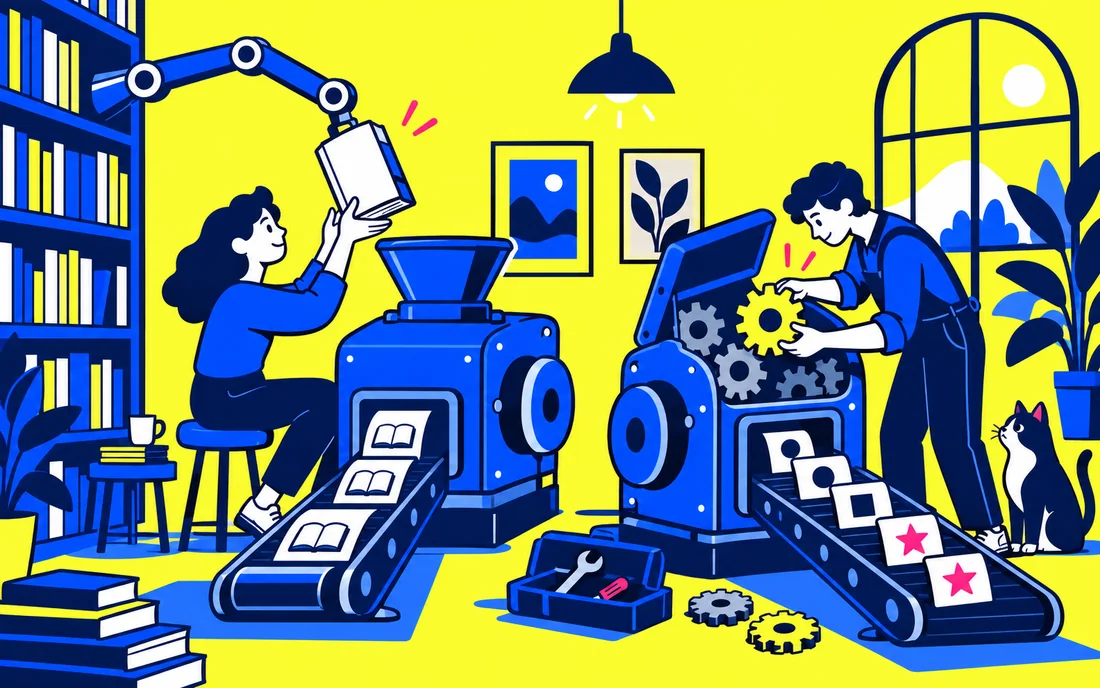
Retrieval-augmented generation supplies relevant material at inference time. Fine-tuning adapts a model using additional training examples. If the problem is access to changing documents, retrieval is a natural candidate. If the problem is a repeatable format or task behaviour, training may be worth investigating after simpler prompting approaches.
Compare maintenance
Retrieval requires usable sources, indexing, permissions and evidence selection. Fine-tuning requires representative examples, training evaluation and a plan for updating behaviour. Neither automatically prevents unsupported statements. A system can also combine the two when knowledge access and task consistency are separate needs.
Test one improvement at a time
Create a baseline, then change the evidence pipeline or the behaviour adaptation separately. Measure whether the intended failure becomes less common. Do not use training as a substitute for enforcing current access permissions, or retrieval as a substitute for testing the model’s use of evidence.
Diagnose the failure before choosing an adaptation
Collect incorrect outputs and classify the cause: missing knowledge, poor retrieval, unwanted style or an inconsistent task pattern. Retrieval-augmented generation can supply relevant information at answer time; fine-tuning changes model behaviour through training. Test the smallest intervention that addresses the observed problem. This proposed diagnosis prevents a training project from being used to solve a document freshness issue or a retrieval system from being expected to teach every desired behaviour.
Questions readers ask
Should I use RAG or fine-tuning for current company documents?
RAG is often a starting point when the problem is supplying changing evidence. Fine-tuning addresses different behavioural needs. Diagnose and evaluate the actual failure before choosing.
Follow the evidence.
AI-assisted editorial decision guide. No hands-on benchmark, product score or winner is claimed. The proposed comparison is a method readers can run; current features, terms and results must be checked for the selected versions.
Public sources support the factual background. Analysis and illustrative exercises are identified in the text. How we assess AI · Editorial standards
Spot a factual error or an outdated detail?