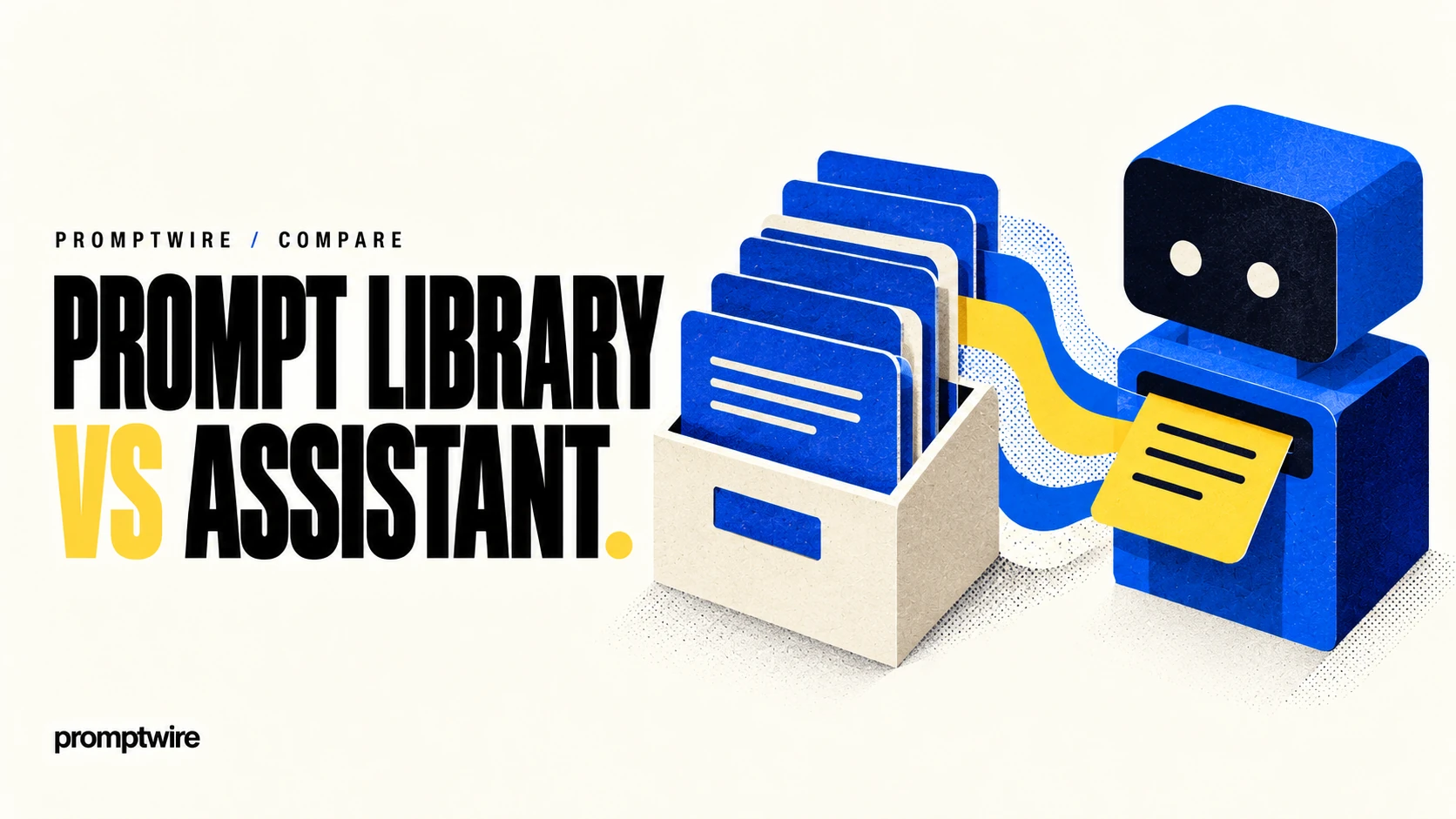
A prompt library stores instructions people can adapt. A custom assistant can bundle instructions with selected knowledge, tools or interface behaviour, depending on the platform. A more elaborate package is useful only if those additional elements improve the recurring task.
Compare maintenance
Test how changes reach users, who can edit the instructions and how outdated examples are retired. An assistant with tools also needs permission review and monitoring. A prompt copied into many personal documents can become difficult to update consistently.
Start with the smallest package
Use a library for transparent, adaptable task recipes. Consider a custom assistant when a stable workflow needs shared resources or controlled actions. Assign an owner and evaluate changes against a small set of representative tasks before distributing an update.
Test maintenance after a policy change
Create a reusable prompt and a configured assistant for the same fictional writing task. Change one approved rule and inspect how each workflow is updated and how users discover the change. Compare flexibility, consistency and ownership. This proposed exercise evaluates the ongoing life of the setup, not only its first output. A convenient custom assistant can become stale if nobody owns its instructions and reference material.
Questions readers ask
Is a custom assistant always better than a reusable prompt?
No. A prompt may be sufficient for a simple task. A configured assistant can help with shared context, but it adds maintenance and ownership requirements.
Follow the evidence.
AI-assisted editorial decision guide. No hands-on benchmark, product score or winner is claimed. The proposed comparison is a method readers can run; current features, terms and results must be checked for the selected versions.
Public sources support the factual background. Analysis and illustrative exercises are identified in the text. How we assess AI · Editorial standards
Spot a factual error or an outdated detail?