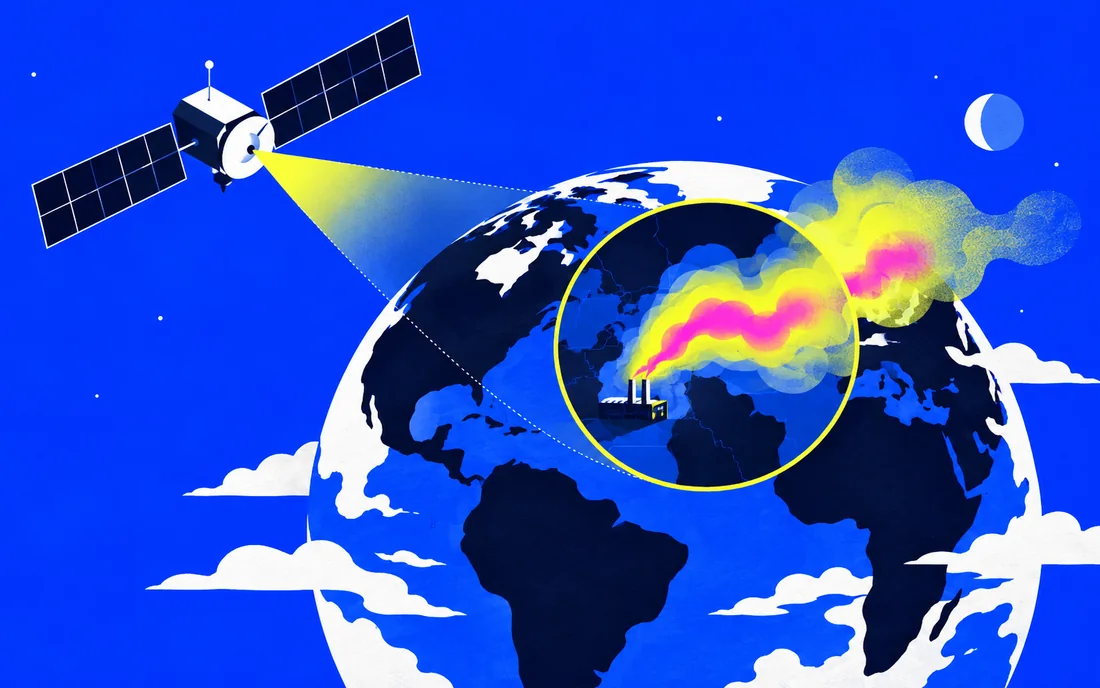
Google’s September 9 post describes MAPL-EMIT, developed with NASA’s Jet Propulsion Laboratory using observations from NASA’s EMIT instrument. The team reported its work in PNAS and released a plume database, visualisation tools and model resources. Performance figures in the announcement are the researchers’ reported results.
Read the dated primary source ↓Why the data matters
Finding an emission source and reducing its emissions are separate steps. A larger catalogue can help researchers and operators investigate where to look, but useful action also requires validation, attribution and follow-up. Remote sensing results need to be interpreted with their measurement limits.
Questions for follow-up
Read the study’s methods before generalising its reported gains to other sensors or conditions. Look for independent use of the released resources and evidence that detections inform verified interventions. Open tools make scrutiny possible; they do not remove the need for scientific checking.
What this means in practice
Detecting a signal from remote observations is different from confirming its source and deciding what action to take. The useful questions include spatial resolution, timing and uncertainty. Keep the research method's stated scope visible and distinguish an estimated pattern from an independently verified account of a particular emitter.
Questions readers ask
Is a satellite-based AI estimate the same as a confirmed on-site measurement?
No. They are different forms of evidence with different limits. Read the validation method and uncertainty associated with the estimate.
Follow the evidence.
Source-based coverage of the dated announcement below, with Promptwire analysis. Company-reported claims are attributed to their source. The update date reflects added context and answers; it does not change the original event date.
Public sources support the factual background. Analysis and illustrative exercises are identified in the text. How we assess AI · Editorial standards
Spot a factual error or an outdated detail?