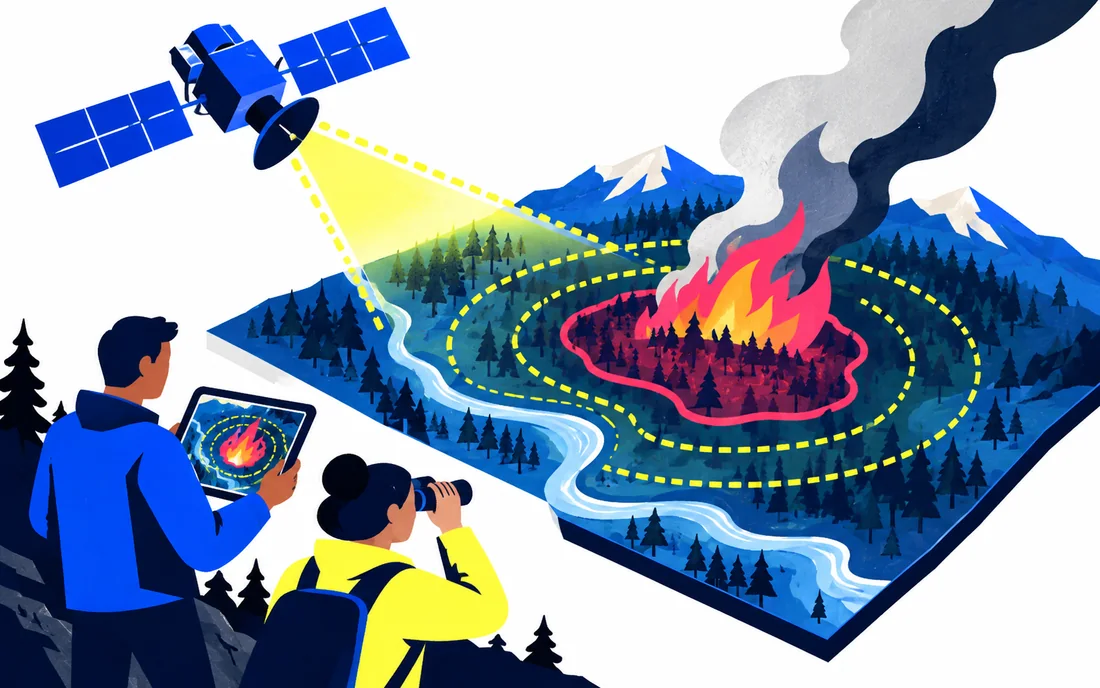
In a September 15 research interview, Google discussed its work with Muon Space and the Earth Fire Alliance’s FireSat programme. The project uses satellite imagery and AI to distinguish possible wildfires from other heat sources. Its goal of frequent worldwide coverage depends on a constellation that is still being deployed.
Read the dated primary source ↓Why detection is difficult
A useful alert must arrive early and avoid overwhelming responders with false alarms. Observing how a heat source changes over time can help distinguish different events. The value of a detection system therefore depends on both the observations and the operational process that receives them.
What to watch
Track deployed coverage, detection validation and how information reaches responsible authorities. Future constellation targets should remain labelled as targets. This is coverage of a research and infrastructure programme, not a substitute for official local emergency information.
What this means in practice
Environmental AI should be evaluated against the observation or forecast it is designed to support. A useful research result does not automatically become a complete emergency-response system. Readers should look for validation conditions, update timing and how uncertainty reaches the people making operational decisions.
Questions readers ask
Does an AI wildfire research result establish operational readiness everywhere?
No. Deployment depends on validation, local conditions and integration with responsible decision-makers. Research capability and operational readiness are different claims.
Follow the evidence.
Source-based coverage of the dated announcement below, with Promptwire analysis. Company-reported claims are attributed to their source. The update date reflects added context and answers; it does not change the original event date.
Public sources support the factual background. Analysis and illustrative exercises are identified in the text. How we assess AI · Editorial standards
Spot a factual error or an outdated detail?


