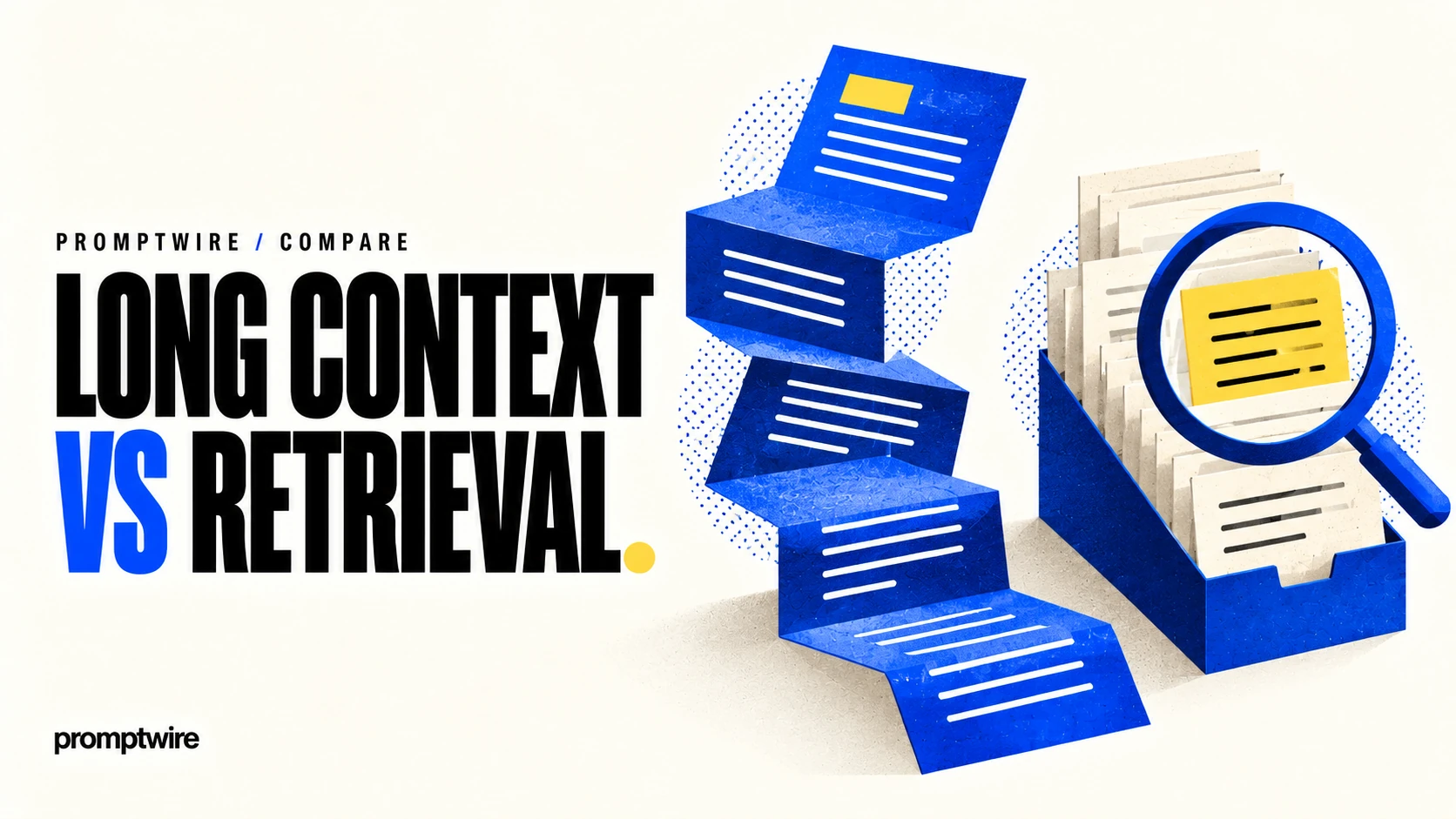
A context window is the amount of information a model can consider within a request, subject to that model's rules and limits. Fitting material into the window does not establish that the model will identify and use every relevant detail correctly.
What fits in context
The context window is the bounded input and output space available for a model interaction. Instructions, conversation history, retrieved passages and generated text compete for that space. An application may shorten older messages or select only part of a document before the model sees it.
Capacity is not attention quality
Even when all the material fits, the model may miss a detail or confuse similar facts. Imagine reviewing several versions of a policy: the right answer may depend on which version is current, not which one contains the most matching words. More input can add relevant evidence and distracting contradictions at the same time.
Make the evidence easier to use
Label documents with titles, dates and version status. Ask for the specific passage supporting each important conclusion. For a repeated workflow, test questions whose answers appear at different positions in the material. If the system struggles, organise or retrieve the relevant sections instead of assuming a larger window will fix everything. Persistent memory is a separate design choice: saving a conversation does not mean every saved detail is present in the next model request.
A worked example
Place a current policy and an outdated version in the same long input. Ask which rule applies and require a reference to the amendment. A response that fits the input but selects the old rule has failed the task. To improve the workflow, clarify document dates, remove irrelevant material or retrieve a focused subset, then compare results rather than assuming a larger window solves the problem.
Questions readers ask
Does a longer context window guarantee better answers?
No. Capacity and accurate evidence selection are different. Evaluate whether the model uses the right material, especially when the input contains conflicts or distractions.
Follow the evidence.
AI-assisted explanation with linked technical references. Examples are illustrative learning exercises, not reported customer deployments or experimental results.
Public sources support the factual background. Analysis and illustrative exercises are identified in the text. How we assess AI · Editorial standards
Spot a factual error or an outdated detail?