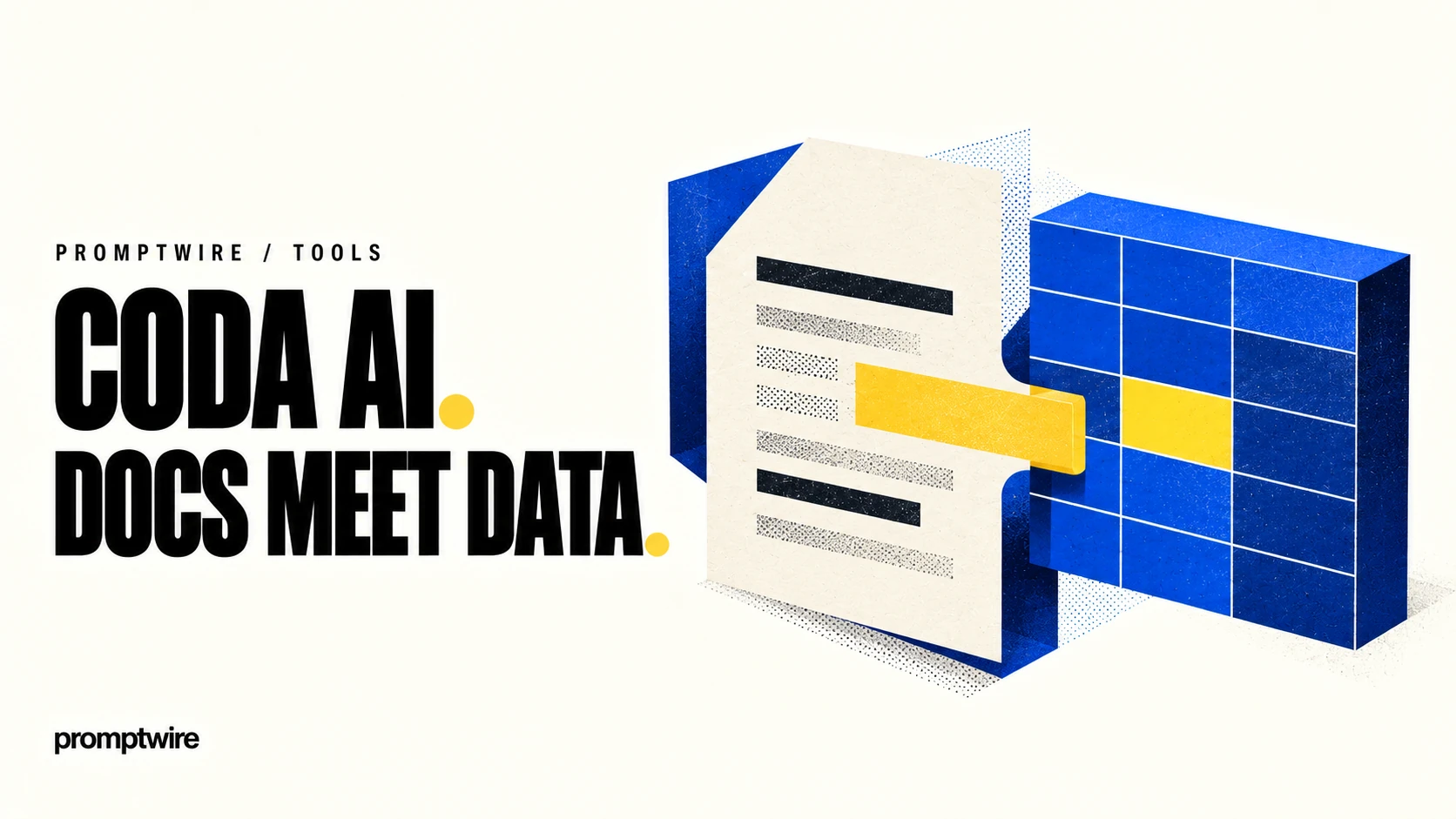
Decide which facts belong in tables and which need explanatory text. For an illustrative project review, keep owners, dates and status in consistent fields rather than scattered paragraphs. This gives an AI-assisted step more reliable material to work with.
Define the transformation
Ask for a specific output, such as a summary of overdue tasks or a draft update based on selected rows. Explain how missing values should be handled. Keep generated interpretation separate from the underlying record so a suggestion does not silently become a fact.
Review the result
Check calculations, row selection and any inferred commitments. Confirm current Coda AI features and automation behaviour before depending on a particular action. Give someone ownership of correcting the source data. The useful workflow connects a readable document with information that can be inspected and updated. AI adds value when it helps people understand that structure without obscuring where each conclusion came from.
Connect a summary to the rows behind it
Build a fictional project table in Coda with owners, dates and status values. Ask its available AI features to draft a weekly update, then verify every statement against the relevant row. Include a blank owner and an overdue task to test how missing information is described. This proposed exercise keeps generated prose connected to structured work. Review any automated changes separately from summaries, because editing a record has consequences beyond describing it.
Questions readers ask
What should I verify in an AI summary of a Coda table?
Check row-level facts, missing values and the difference between a recorded status and an inferred conclusion. Review writes to the table as separate actions.
Follow the evidence.
AI-assisted, source-based workflow guide. The exercise above is a proposed evaluation, not a hands-on test or a scored review. Check current product documentation for features, availability and terms.
Public sources support the factual background. Analysis and illustrative exercises are identified in the text. How we assess AI · Editorial standards
Spot a factual error or an outdated detail?