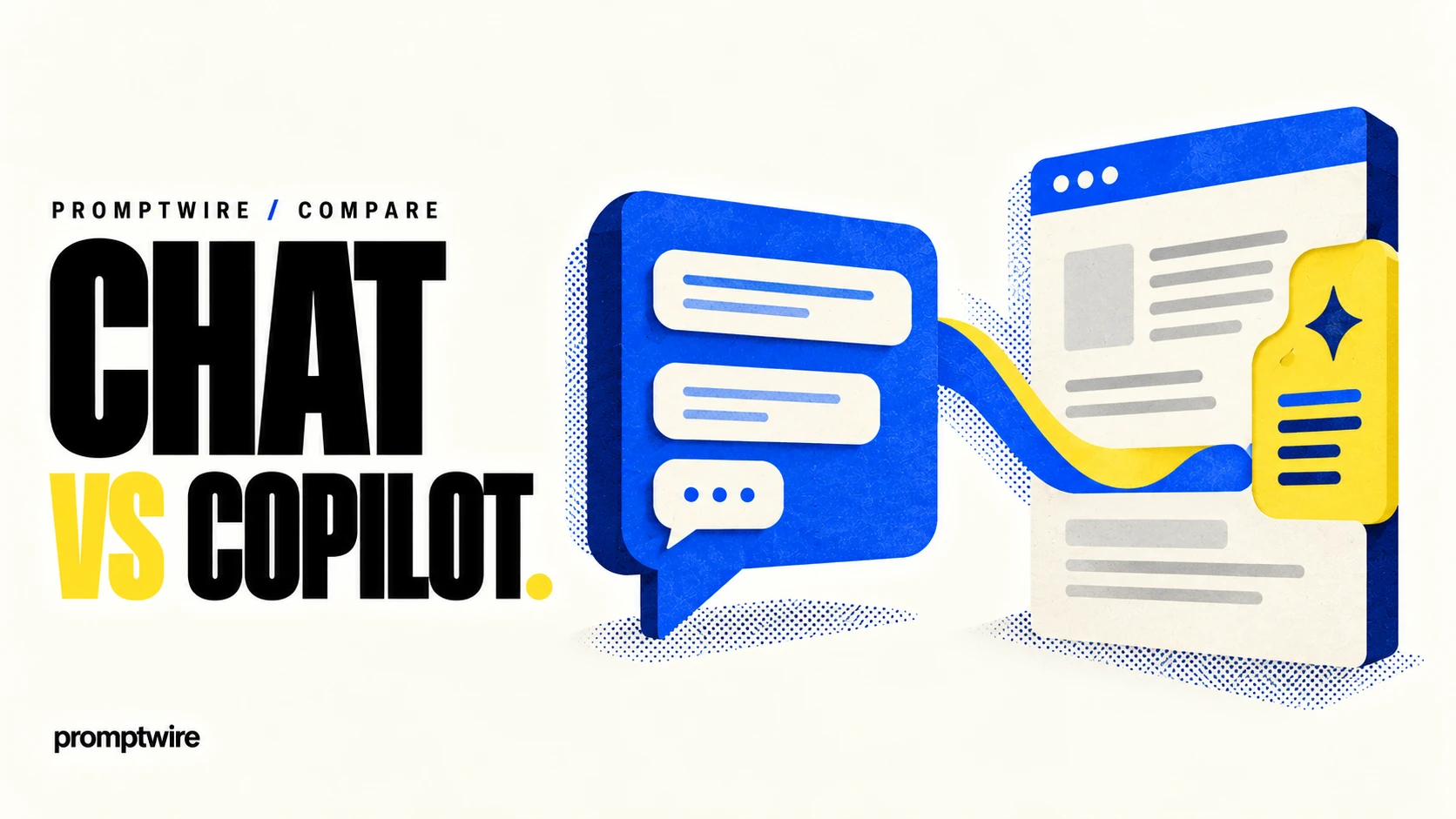
A chat interface offers a flexible place to ask questions and combine ideas. An embedded copilot can act near the document, record or design the user is already handling. The latter may reduce context switching, but it also needs clear boundaries around what application data it can access.
Compare real task completion
Observe people completing the same job in both patterns. Count unnecessary transfers, correction effort and uncertainty about saved changes. A convenient suggestion is not a completed task if users still need to move it manually into the system of record.
Design visible control
Use chat for open-ended exploration when that fits the task. Embed assistance where context and actions are well defined. In either design, show whether content is a draft, what evidence informed it and whether an action has actually been applied.
Count the handoffs around the answer
Complete the same fictional task through a standalone chat and an embedded copilot. Record copying, context preparation, permission checks and the effort to apply the result. An embedded interface may reduce handoffs, while standalone chat may offer a useful space for exploration. This proposed comparison measures the whole job rather than treating two similar paragraphs as proof that the experiences are equivalent.
Questions readers ask
Why might an embedded copilot be useful even with a similar model?
It may have better access to relevant context and reduce handoffs. Evaluate those benefits alongside permissions, transparency and the ability to review its actions.
Follow the evidence.
AI-assisted editorial decision guide. No hands-on benchmark, product score or winner is claimed. The proposed comparison is a method readers can run; current features, terms and results must be checked for the selected versions.
Public sources support the factual background. Analysis and illustrative exercises are identified in the text. How we assess AI · Editorial standards
Spot a factual error or an outdated detail?