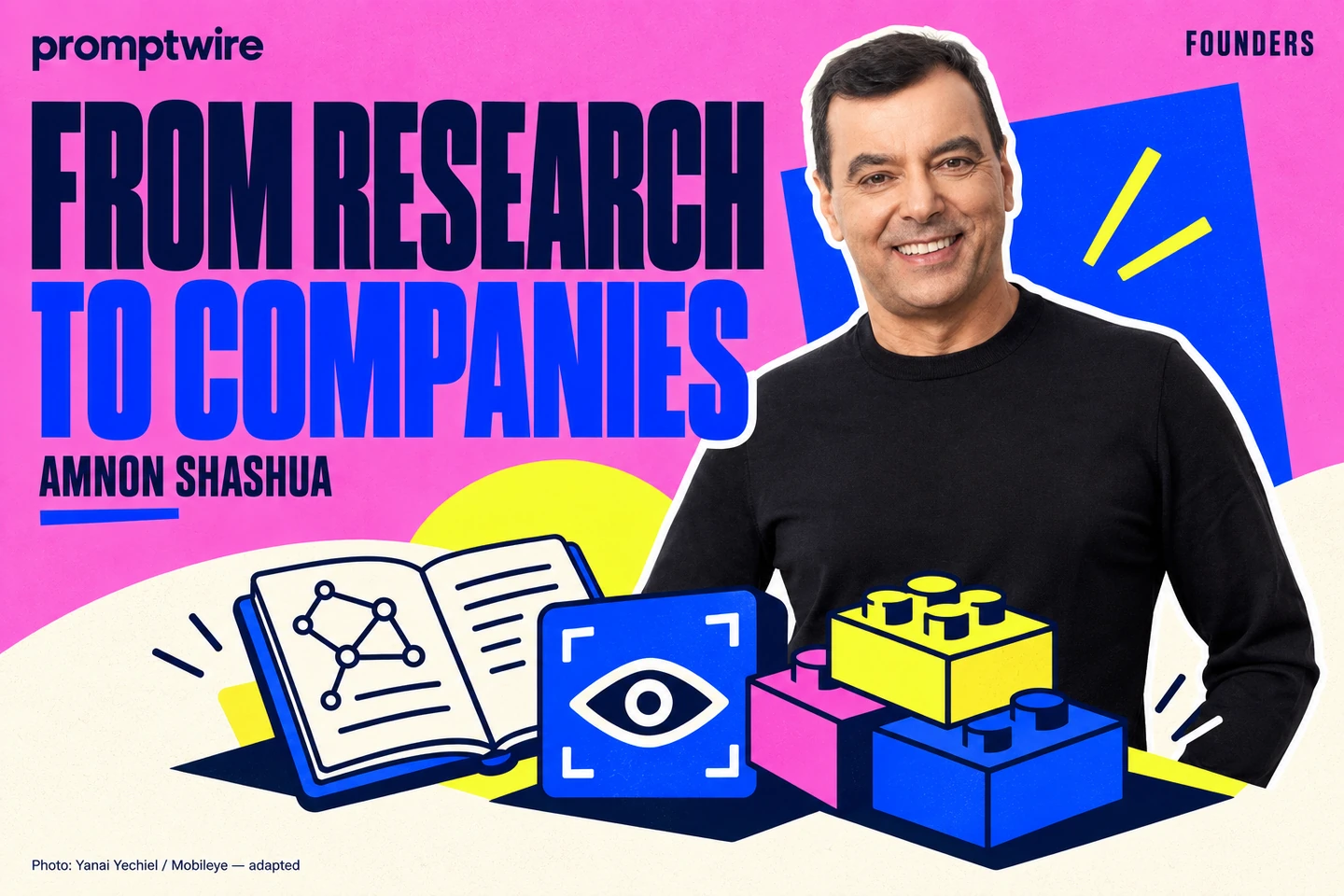
Amnon Shashua co-founded Mobileye in 1999 and has also been involved in AI21, as documented in the companies' materials. His work connects computer vision and language AI. The profile explores how the consequences of an error should shape evaluation, deployment boundaries and the evidence expected from an AI system.
- Person
- Amnon Shashua
- Company
- AI21 Labs
- Area of work
- Computer vision and dependable AI systems
A broad AI background
Mobileye’s biography describes Amnon Shashua’s work in computer vision, his academic role at the Hebrew University of Jerusalem and his co-founding of Mobileye in 1999. AI21’s historical funding announcement also documents his involvement in the language-model company. This profile connects those public chapters without assuming the same current role in every venture.
Public record: AI21 Labs: founder biography or company record · ai21.com — official reference
Why application context changes the standard of evidence
An error in an early creative draft is different from an error in a system interacting with the physical world. The same headline accuracy figure can conceal very different consequences. Shashua's documented work in computer vision provides context for this distinction. A reader should ask what the system controls, which operating conditions are supported and how failures are handled. Technical capability cannot be assessed responsibly without understanding the application in which a result will be used.
What vision and language systems have in common
Both can encounter inputs that differ from the examples used during development. Both need a way to recognise limits and fit into a larger workflow. But a successful method in one domain should not be assumed to transfer unchanged to another. Our analysis is that the useful connection across Shashua's company history is disciplined problem definition: identify the observable task and its failure costs before choosing how to measure progress. The founder's breadth is context, not evidence that two technologies are interchangeable.
Questions to ask about a high-consequence AI claim
Ask which conditions were tested, which remain outside scope and what independent validation exists. Look for the difference between a component result and the performance of the complete system. Determine who remains responsible when the system cannot proceed. This is a general evaluation framework, not operational advice for deploying driving or other safety-critical technology. It helps readers interpret announcements without jumping from a successful demonstration to a claim of unrestricted readiness, and without assuming a historical role remains current across every venture.
Questions about Amnon Shashua
When was Mobileye founded?
Mobileye's biography places Shashua's co-founding of the company in 1999.
Can an AI benchmark establish readiness for every environment?
No. Evidence applies to the tested conditions and system. Broader deployment requires examining conditions, failure modes and responsibilities beyond the benchmark.
Follow the evidence.
This AI-assisted profile combines the linked public record with Promptwire's editorial analysis. It is not an interview or a hands-on product review. Suggested tests are proposals, not reported results. Dated roles describe the period identified in the text. Company claims are attributed to their source.
Public sources support the factual background. Analysis and illustrative exercises are identified in the text. How we assess AI · Editorial standards
Spot a factual error or an outdated detail?