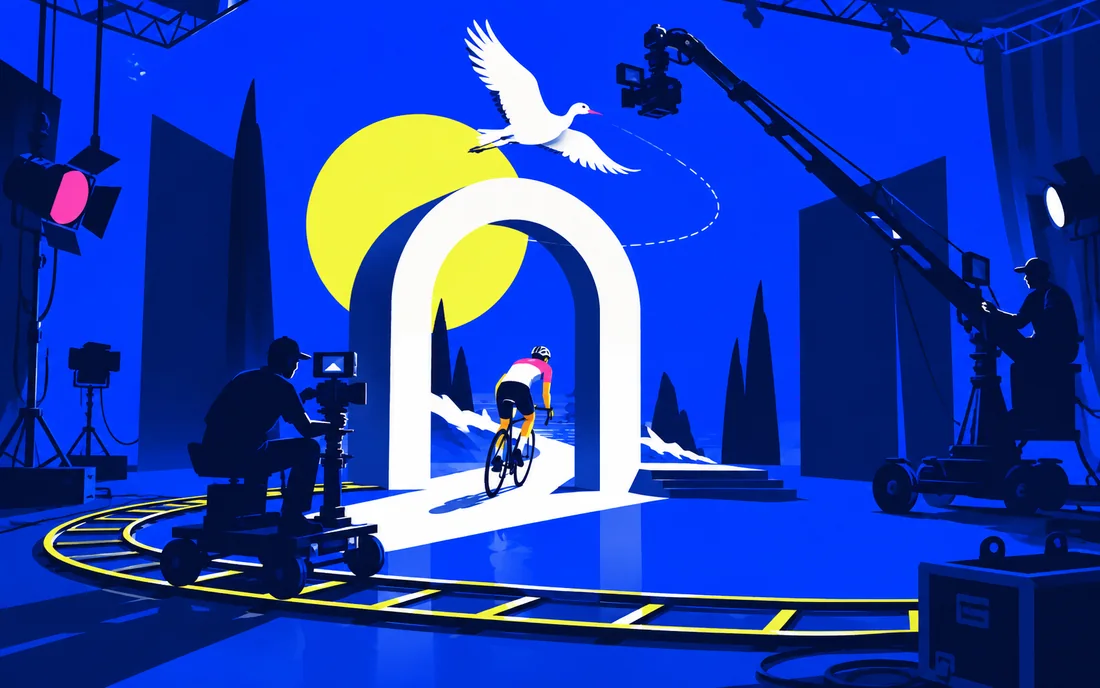
AI video generation creates or transforms moving imagery from inputs such as text, images or video. Its quality depends on temporal consistency as well as individual frames. Evaluate movement, identity, timing and the ability to revise a shot for its intended use.
Think in shots
A shot brief should identify what the camera sees, what moves and how the scene changes over time. A single clear action is easier to assess than a paragraph containing several locations and events. Define the intended duration and aspect ratio using the controls available in the chosen tool.
Separate motion decisions
Subject movement, camera movement and environmental movement are different instructions. For an illustrative product shot, the object might remain still while the camera moves gently around it. Asking everything to move at once can make continuity harder to judge.
Review the full clip
Watch for identity drift, unstable objects, impossible contact and changes that occur between otherwise attractive frames. Check the beginning and ending if the clip must join another shot. Keep a storyboard or reference frame for the essential visual constraints. The practical aim is usable footage that fits an edit, not just a striking first frame. Plan where sound, titles and factual labels will be added, and verify them separately from the generated visual sequence.
A worked example
Request a slow camera move around a fictional object. Inspect whether the object's geometry and position remain stable from beginning to end. Then request one change while preserving the rest. A result that looks excellent in a thumbnail but changes the object halfway through the clip has not satisfied the brief. Review the sequence at its intended playback speed.
Questions readers ask
Why is a good first frame insufficient for evaluating AI video?
Video must remain coherent over time. Motion, identity and scene relationships can fail after a convincing opening frame.
Follow the evidence.
AI-assisted explanation with linked technical references. Examples are illustrative learning exercises, not reported customer deployments or experimental results.
Public sources support the factual background. Analysis and illustrative exercises are identified in the text. How we assess AI · Editorial standards
Spot a factual error or an outdated detail?